Why we're starting with one route
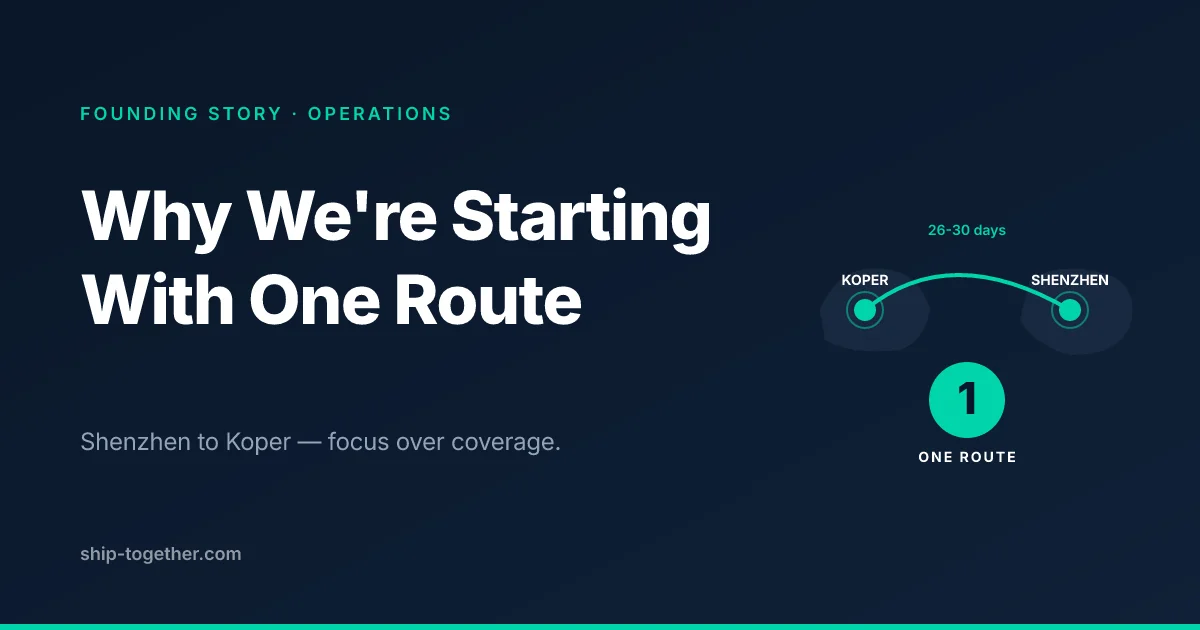
Most logistics platforms launch with a map full of pins. Dozens of trade lanes. Hundreds of ports. The pitch is always the same: global coverage from day one.
We took the opposite approach. ShipTogether is starting with a single route: Shanghai (CNSHA) to Rotterdam (NLRTM). One origin. One destination. One container type: 40HC.
The case for focus
Shared container shipping is not a technology problem. It's an operations problem. When multiple importers put goods in the same box, everything has to work: consolidation timing, customs documentation, cargo compatibility, last-mile handoff. If any of these fail, the whole model falls apart.
Running one route means we can be present at both ends. We can build relationships with the consolidator in Shanghai and the deconsolidation partner in Rotterdam. We can understand the actual pain points, not the theoretical ones.
Why Shanghai to Rotterdam
Shanghai is the world's busiest container port. Rotterdam is the busiest in Europe. The lane between them is the single densest container corridor from China to the continent — which is exactly why we started here.
Pooling only works when enough cargo is moving the same way at the same time. On a thin, niche lane you can wait weeks for a shared container to fill. On Shanghai–Rotterdam there's a constant flow of SME-sized shipments, so a pool fills in days, not weeks — and sailings are frequent and predictable. We launch where the liquidity already is, not where a map looks impressive.
It's also the most-quoted, most-benchmarked lane in the trade, which keeps pricing honest: you can check our pool rate against the going CFS-to-CFS LCL rate yourself. Regular sailings and a transit of roughly 28 days mean predictable scheduling — which matters when you're coordinating several importers into one box.
What happens after one route
Once the Shanghai–Rotterdam lane is running reliably — meaning containers are filling, shipping on schedule, and importers are getting their goods without problems — we'll add a second route. Then a third.
But we won't add routes faster than we can operate them well. The whole point of ShipTogether is that sharing a container should be as reliable as booking your own. That takes operational discipline, not just software.
If you import goods from China into Europe and you're tired of paying for space you don't need, we'd like to talk. The pilot is open.